


Hands On Pottery: 3x Hand Building Pottery Ideas
- Art Play London

- Dec 22, 2025
- 6 min read
Hello lovely makers! 👋
I’m writing this with slightly clay-dusted hands and a very enthusiastic heart, because today we’re diving headfirst into the wonderfully tactile world of hand building pottery. At Art Play, we’re all about playful creativity, getting stuck in, and making things that are as joyful as they are useful. Whether you’re brand new to clay or already eyeing up shelf space for your next masterpiece, hand building is one of the most satisfying (and forgiving!) ways to work with ceramics.
In this blog, I’m sharing three hands-on pottery ideas that are perfect for beginners and still exciting for more confident makers:
Simple pots – ideal for plants, pens, keys, and all the little bits of life
A cat pot – because everything is better with a cat 🐾
Under the sea–themed décor – playful, imaginative, and full of texture
And as a little bonus at the end, I’ll show you how you can capture your dog’s footprint in clay (yes, really – and yes, it’s adorable).
So pop the kettle on, roll up your sleeves, and let’s get hands on with pottery.

Why Hand Building Pottery Is So Lovely
Before we get into the ideas, let’s talk briefly about why hand building is such a brilliant place to start.
Hand building is exactly what it sounds like: shaping clay using your hands and simple tools, rather than a potter’s wheel. Techniques like pinch pots, coil building, and slab building allow you to work slowly, intuitively, and with loads of room for personal expression.
Here’s why we love it at Art Play London:
Beginner-friendly – no scary machinery, just you and the clay
Mindful and calming – genuinely therapeutic (science agrees!)
Perfect for playful designs – animals, textures, wonky charm encouraged
Accessible – great for adults, teens, and even family workshops
You don’t need to aim for perfection. In fact, the little fingerprints, wobbles, and quirks are what make hand-built pottery so special. Every piece tells a story.
Right, shall we make something?


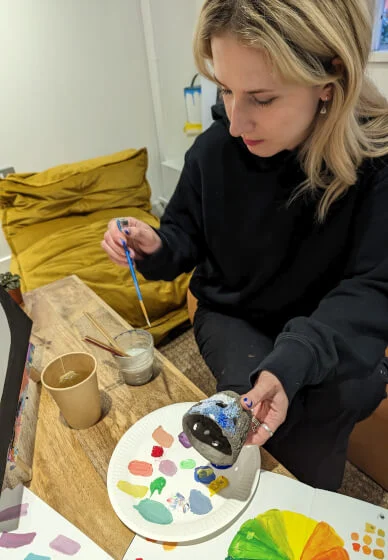
1. Simple Pots (For Plants, Keys & Everyday Treasures)
Let’s start with the classic: a simple pot.
These are the unsung heroes of handmade ceramics. They’re practical, endlessly customisable, and a brilliant confidence booster if you’re new to clay. At Art Play London, we often recommend simple pots as a first project because they teach you the basics while still giving you something genuinely useful to take home.
What You Can Use Them For
Simple doesn’t mean boring. These little pots can be used for:
Houseplants or succulents 🌱
Holding keys by the front door
Pens, pencils, or paintbrushes
Jewellery or hair accessories
Tealight holders (with care)
They also make fantastic gifts, especially when paired with a plant or a handwritten note.
Technique: The Pinch Pot
One of the easiest ways to make a simple pot is the pinch pot method.
Start with a ball of clay about the size of a tennis ball.
Press your thumb gently into the centre.
Slowly pinch the walls, turning the clay as you go.
Aim for even thickness – but don’t stress if it’s not perfect.
You can keep it round, gently square it off, or create a more organic shape. The joy is in letting the clay guide you.
Adding Personality
This is where things get fun. Even the simplest pot can be transformed with small details:
Texture – press in leaves, fabric, lace, or stamps
Handles – add little side handles for a mug-like feel
Rims – flare the top outwards or roll it over
Carving – scratch in simple patterns or initials
Once glazed, these details really come to life. A speckled glaze for a rustic feel, or a glossy pop of colour if you’re feeling bold.
At Art Play, we love seeing how different everyone’s pots look, even when starting from the same technique. It’s a lovely reminder that creativity is deeply personal.

2. The Cat Pot (Because Obviously)
If you’ve ever thought, “This pot would be better if it had ears,” then welcome – you are among friends.
The cat pot is one of our most popular hand-building projects, and for very good reason. It’s playful, expressive, and somehow manages to capture personality even when it’s slightly wonky (especially then, actually).
What Is a Cat Pot?
A cat pot is exactly what it sounds like: a small pot with cat-like features. Think:
Pointy ears
A rounded body
Whiskers, noses, sleepy eyes
It can be used as:
A plant pot (succulents look amazing as cat hair)
A pen holder
A tealight holder (with cut-out eyes)
A purely decorative friend for your shelf
How to Make One
Start with a simple pinch or coil-built pot as your base. Once you’re happy with the shape, it’s time to turn it into a cat.
Ears: Make two small triangles and score and slip them onto the rim.
Face: Add a tiny nose, press in eye shapes, or carve whiskers.
Expression: This is the magic bit. Grumpy, sleepy, curious, surprised – it’s all in the eyes.
No two cat pots are ever the same, which makes them completely irresistible.
Glazing Ideas
This is where your inner cat-obsessive can really shine:
Classic tabby stripes
Solid black with glossy glaze
White with subtle pink details
Calico-style patches
Or go totally wild – we’ve seen blue cats, rainbow cats, and even galaxy cats at Art Play London. We support all creative choices.
Why People Love This Project
There’s something incredibly joyful about making a character. People often say their cat pot ends up feeling like a little companion. It’s light-hearted, fun, and a great reminder that art doesn’t always have to be serious.
Also: they photograph beautifully. Just saying. 📸
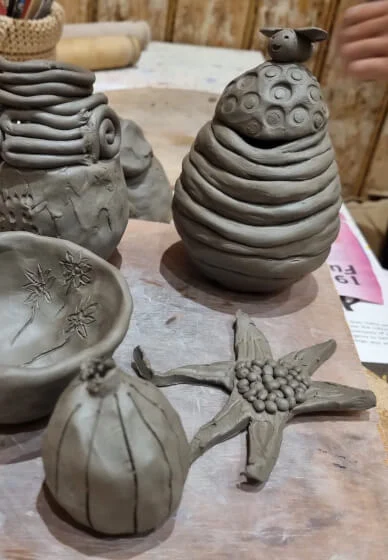
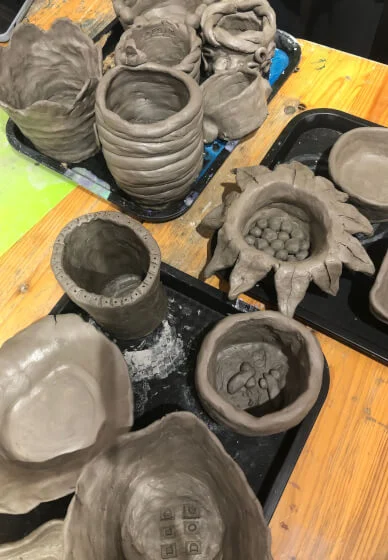


3. Under the Sea–Themed Décor
Now for something a bit more imaginative and decorative: under the sea–themed pottery.
This theme is perfect for hand building because it celebrates texture, movement, and organic shapes. Plus, it’s an excuse to play with glazes in all those gorgeous ocean colours.
What Can You Make?
Under the sea décor can take many forms:
Small bowls with wave-like rims
Wall tiles featuring fish or shells
Trinket dishes shaped like shells
Coral-inspired sculptures
Hanging decorations with sea motifs
These pieces are often more decorative than practical, but they add such character to a space – especially bathrooms, studios, or children’s rooms.
Techniques to Try
Slab building for tiles and wall pieces
Coils to create coral-like textures
Impressing shells, stones, or textured tools into the clay
Don’t worry about realism. Stylised, slightly abstract sea creatures often look more charming and artistic.
Texture Is Your Best Friend
The ocean is full of texture, so lean into it:
Use forks, brushes, or sponges
Layer coils and pinch them into organic forms
Carve flowing lines to suggest water movement
Once glazed, these textures catch the light beautifully.
Glaze Palette Inspiration
Think:
Deep blues and turquoise
Soft seafoam greens
Sandy neutrals
Glossy finishes for a wet-look shine
At Art Play London, we love experimenting with glaze combinations to create that magical, slightly unpredictable ocean effect.

Bonus: Capturing Your Dog’s Footprint in Clay 🐶
Okay, this one is very close to my heart.
If you’re a dog person (or just love sentimental keepsakes), capturing your dog’s footprint in clay is an incredibly sweet project. It’s a lovely way to mark a moment in time – especially while they’re still small, or just very, very cute.
How to Do It Safely
First things first: safety and comfort.
Make sure your dog is calm and relaxed
Use non-toxic clay
Have treats ready (essential)
Roll out a slab of clay about 1–1.5cm thick. Gently press your dog’s paw into the clay – no need to push hard. One clear impression is perfect.
Turning It Into a Finished Piece
You can leave the footprint as is, or turn it into something special:
A hanging wall plaque
A framed tile
A memory stone for the garden
Add their name, the date, or a little heart using carving tools.
Once fired and glazed, it becomes a keepsake you’ll treasure forever.
We’ve seen people get quite emotional over these pieces at Art Play London – in the best possible way. It’s a beautiful blend of craft and memory.
Why Make Pottery at Art Play London?
(Intern enthusiasm incoming, but I promise it’s genuine.)
Art Play London is a space where creativity is encouraged, mistakes are celebrated, and everyone is welcome – whether you’re touching clay for the first time or returning for your tenth project.
What makes our pottery sessions special:
Friendly, supportive tutors
A relaxed, non-judgemental atmosphere
High-quality materials and glazes
A focus on play, not perfection
You don’t need to be “good at art”. You just need curiosity and a willingness to get your hands a bit messy.
Final Thoughts: Get Stuck In
Hand building pottery is one of those rare activities that manages to be creative, calming, and practical all at once. Whether you’re making a simple pot for your keys, a cheeky cat companion, or an underwater-inspired artwork, each piece carries a bit of you in it.
And that’s the magic.
So if you’ve been thinking about trying pottery, consider this your sign. Come and play with clay, make something with your hands, and leave with a smile (and maybe a slightly muddy jumper).
We’d love to see what you create!


Comments